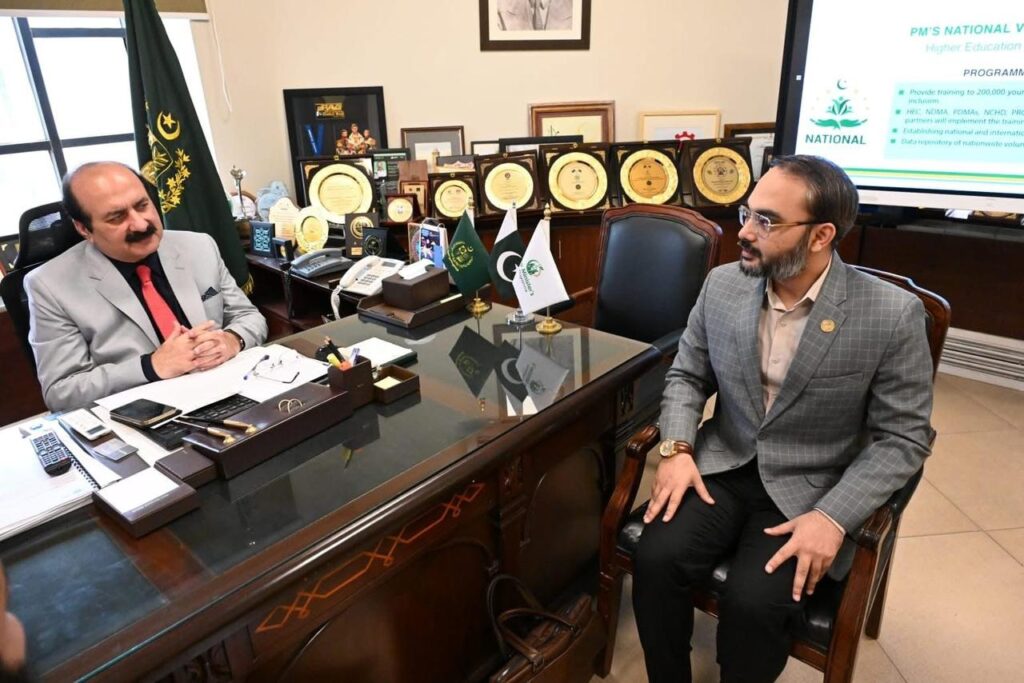
In a momentous step toward advancing youth-driven policy dialogue and sustainable development in Pakistan, Chairman of the Global Peace Summit, Shaikh Mahmud bin Ilyas, met with Rana Mashhood Ahmad Khan, Chairman of the Prime Minister’s Youth Programme, to discuss shared priorities surrounding climate action, sustainability, governance transparency, and youth empowerment.
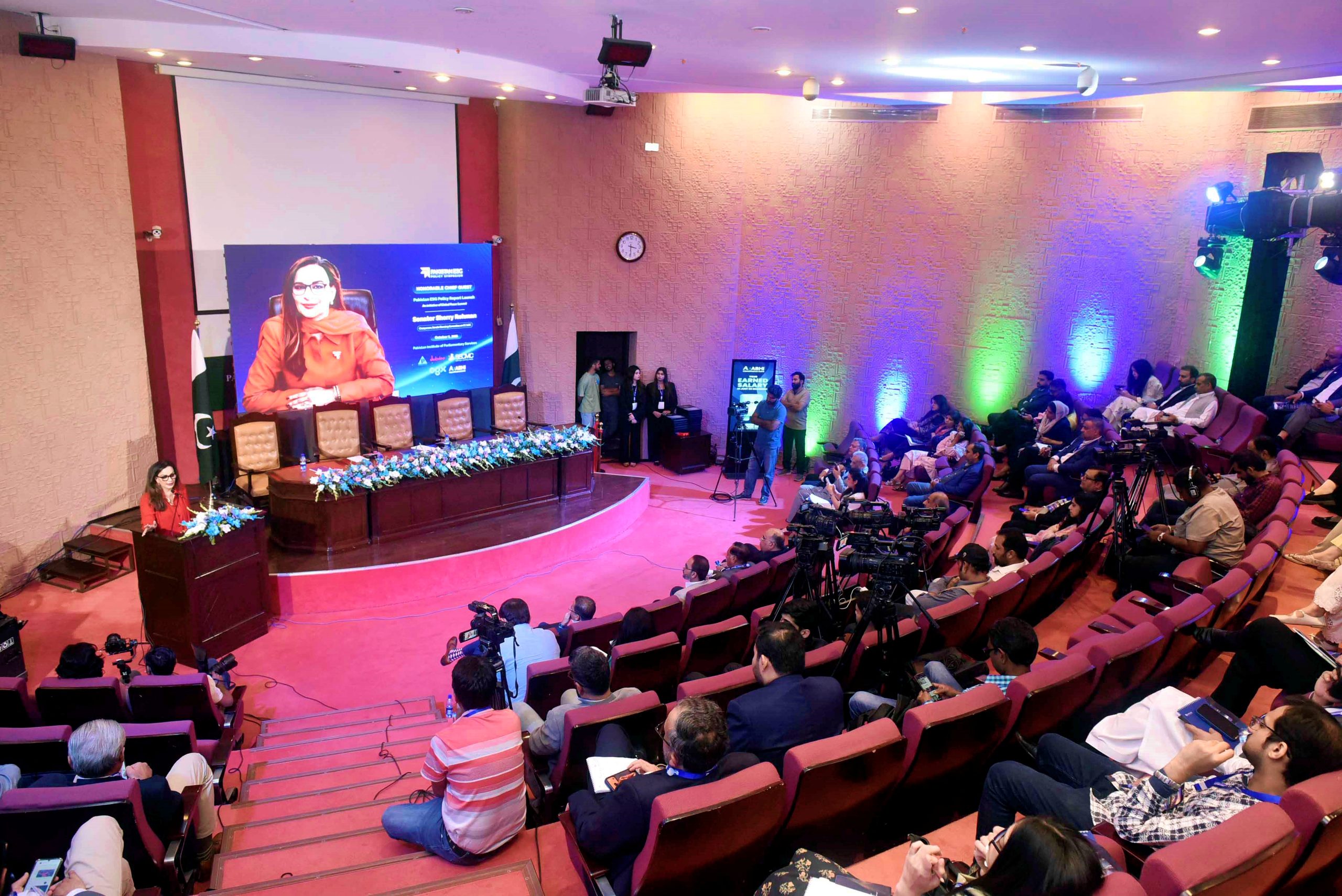
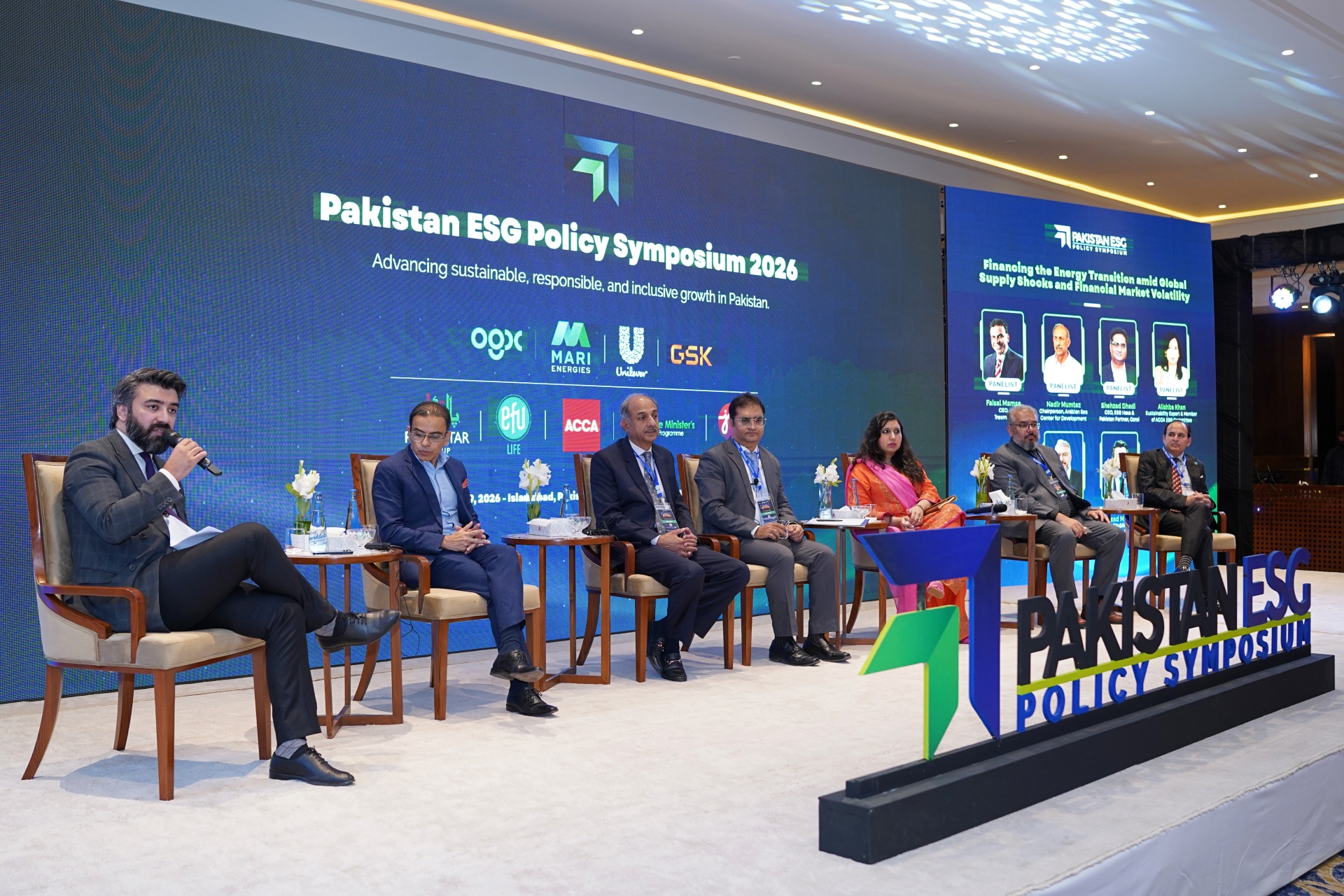
The meeting comes ahead of the Pakistan ESG Policy Symposium (PESGPS), an initiative focused on strengthening dialogue around Environmental, Social, and Governance (ESG) policy, sustainable development, and governance reform across Pakistan’s public and private sectors. Discussions emphasized the importance of cross-sector engagement in addressing interconnected challenges, including climate change, institutional accountability, social inequality, and long-term economic resilience.
Since 2015, the Global Peace Summit has worked to create dialogue around peacebuilding, climate resilience, social justice, and inclusive governance. Through policy discussions and global engagement initiatives, the organization has brought together policymakers, civil society leaders, academics, youth advocates, and development professionals to encourage collaborative approaches to some of the world’s most pressing challenges.
This meeting with the Prime Minister’s Youth Programme reflected the Global Peace Summit’s broader efforts in sustainability and ESG engagement. In 2025, the organization hosted the ESG Summit – Pakistan 2025, bringing together key stakeholders, including the Securities and Exchange Commission of Pakistan (SECP), State Bank of Pakistan (SBP), ACCA Pakistan, and the Auditor General of Pakistan, to advance conversations on sustainable finance, governance frameworks, ESG reporting, and responsible business practices.
Over the years, the Global Peace Summit has also convened policy roundtables and humanitarian dialogues addressing issues ranging from governance and climate policy to regional peace and humanitarian crises, including advocacy and engagement surrounding Palestine and broader questions of justice, displacement, and human rights. These initiatives have reinforced the organization’s role as a platform connecting policy dialogue with actionable engagement across multiple sectors.
During the meeting, both sides highlighted the critical role of youth participation in shaping future policy frameworks and driving sustainable progress. Particular focus was placed on climate change and environmental degradation, issues that continue to disproportionately affect developing countries like Pakistan.
Chairman of the Global Peace Summit, Shaikh Mahmud bin Ilyas, shared insights into the organization’s ongoing efforts to promote sustainability and encourage dialogue on ESG implementation, responsible governance, and institutional accountability. Discussions explored ways to further engage students, young professionals, and emerging leaders in conversations surrounding sustainable development goals, climate awareness, and transparent governance practices.
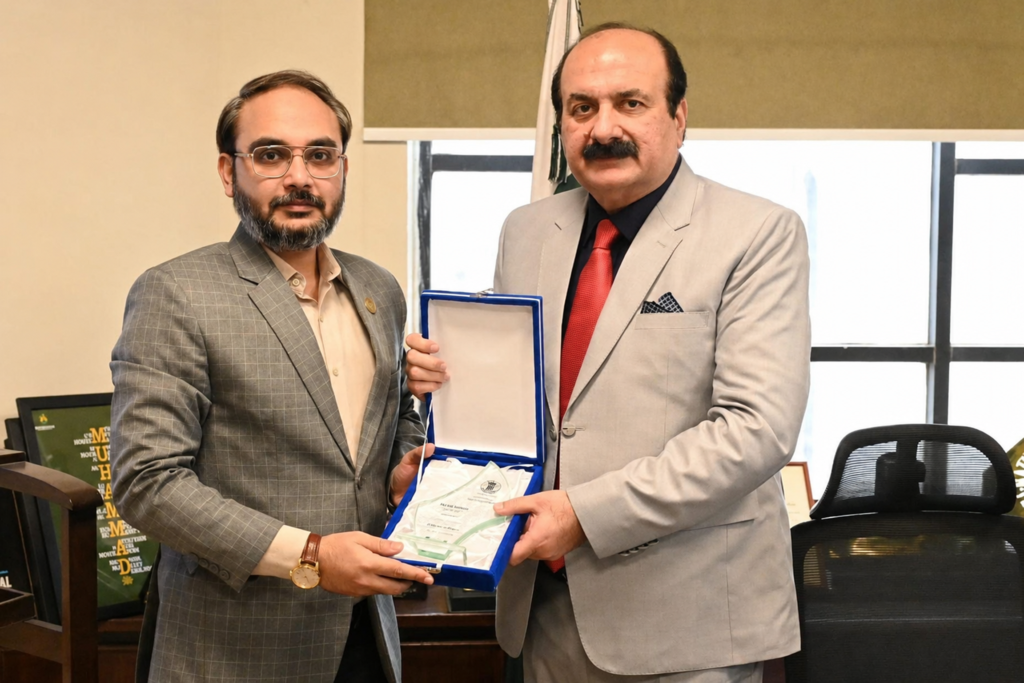
The meeting also underscored the importance of strengthening trust between institutions and communities through accountability, civic engagement, and ethical leadership. Both parties acknowledged that sustainable development cannot be achieved without transparent governance structures and inclusive policymaking processes that empower communities and encourage public participation.
Under the leadership of Rana Mashhood Ahmad Khan, the Prime Minister’s Youth Programme has continued to focus on initiatives related to education, entrepreneurship, digital empowerment, and youth engagement. The discussion reflected a shared commitment to creating platforms where young people can contribute meaningfully to conversations shaping Pakistan’s future.
For the Global Peace Summit, the meeting aligns closely with its mission of transforming dialogue into action by fostering collaboration across sectors and encouraging solutions-oriented engagement on issues that increasingly define the future of governance, peace, and sustainable development.