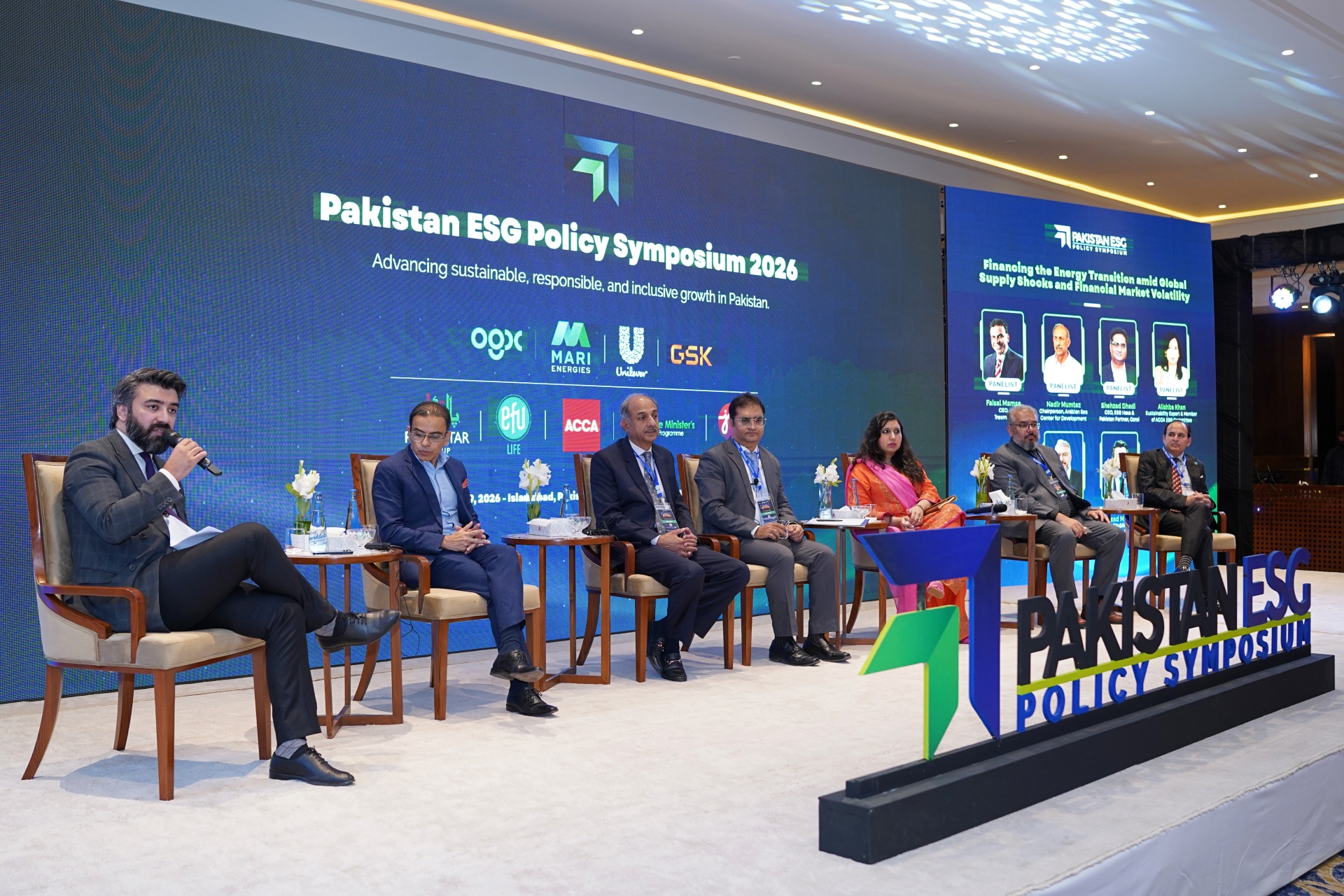
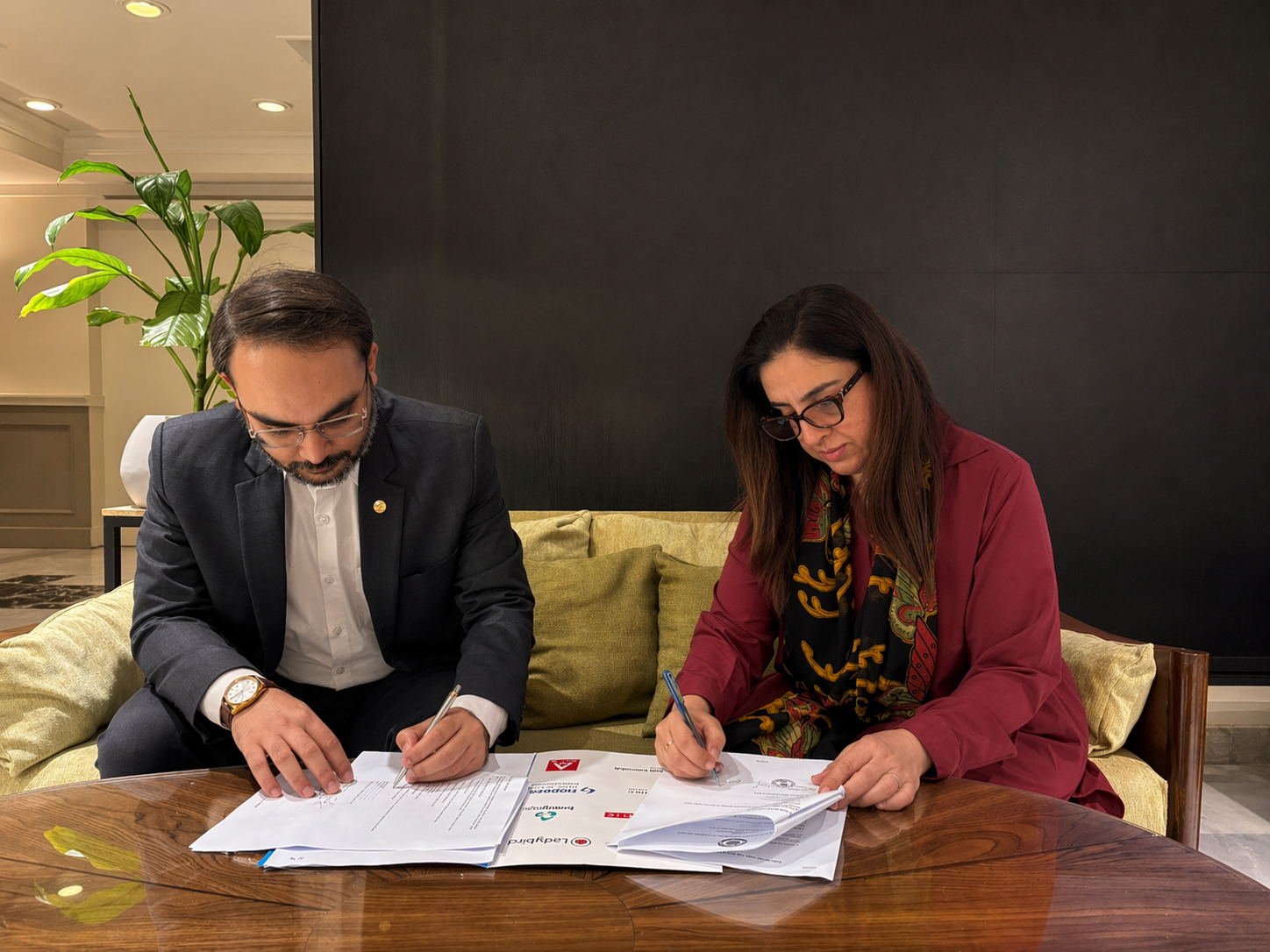
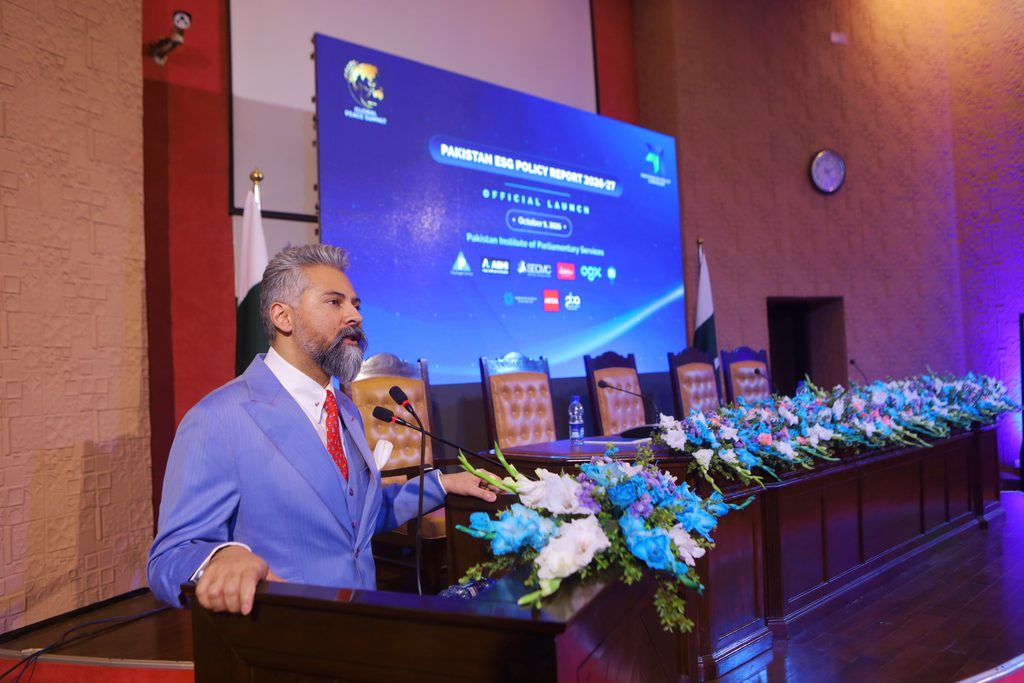
The Global Peace Summit formally launched the Pakistan ESG Policy Report 2026–27 on 5 October 2026 at the Pakistan Institute for Parliamentary Services, Islamabad.
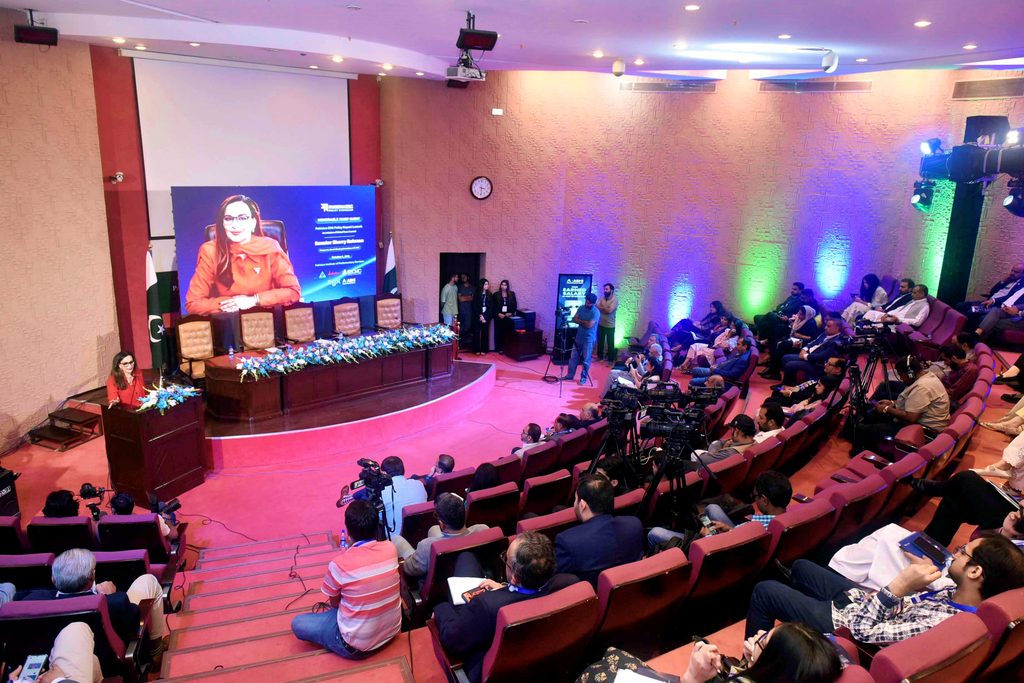
The launch followed the national ESG policy dialogue, which was initiated by GPS in 2025 at The ESG Summit – Pakistan and later the Pakistan ESG Policy Symposium 2026, paving the way for a National Corporate Governance Committee.
H.E. Senator Senator Sherry Rehman, Chairperson, Senate Standing Committee on CC & EC, attended the launch as Chief Guest and called for a more credible and accountable approach to corporate ESG reporting. She stressed that companies must address the substance of their ESG disclosures, rather than using reporting merely to present a favourable account.
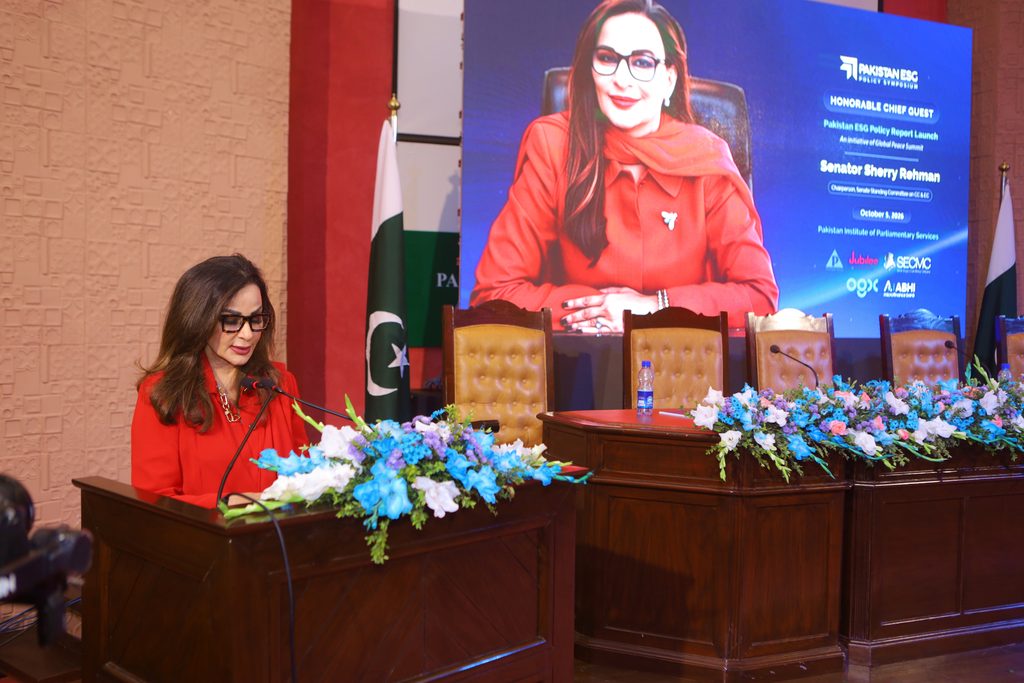
In her remarks, she also placed particular emphasis on incentivizing responsible business practices, with legal penalties serving as a necessary instrument where compliance falls short.
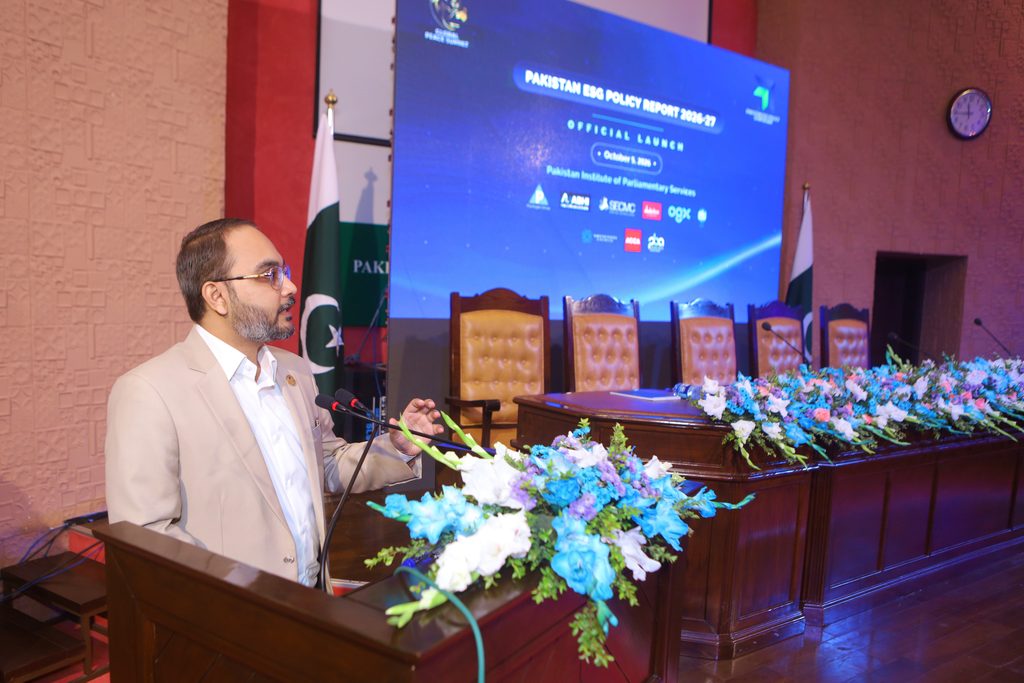
The event opened with remarks by Mr. Shaikh Mahmud bin Ilyas, Founder & Chairman, Global Peace Summit, who spoke about the significance of digitizing governance across sectors for enhanced transparency and accountability.
Justice Jawad Hassan, Judge of the Lahore High Court, highlighted the legal foundations of ESG in Pakistan, noting that the judiciary and Constitution have long addressed environmental rights, from Shehla Zia v. WAPDA to Article 9A’s recognition of the right to a clean and healthy environment.
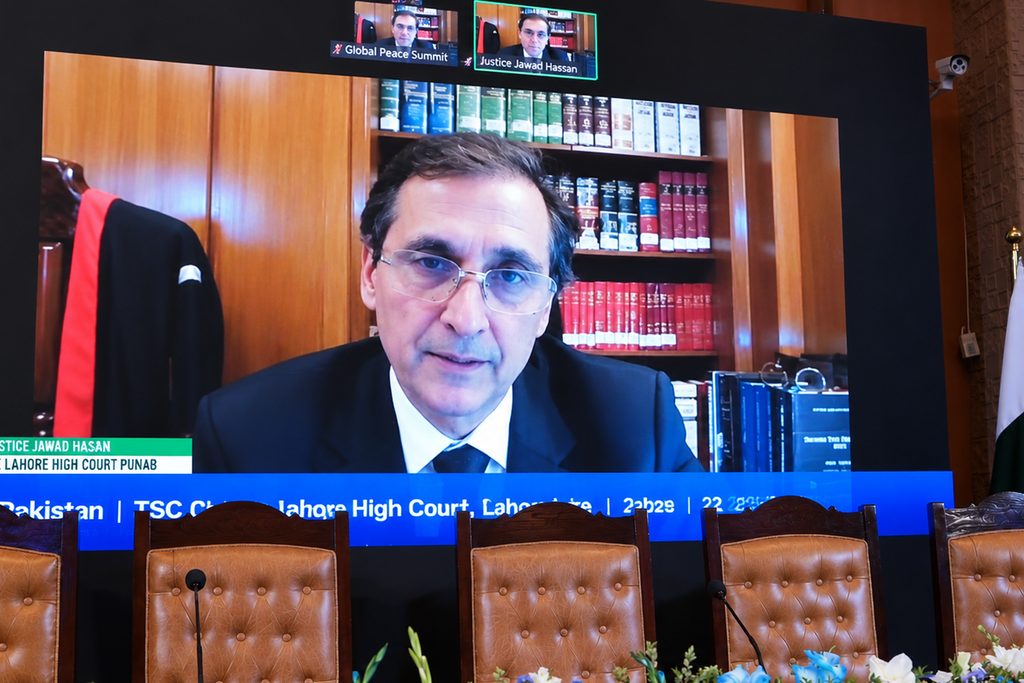
He noted that the 18th Amendment divides environmental and corporate governance responsibilities between provincial and federal authorities, making coordination essential. Justice Hassan said existing laws, including the Climate Change Act 2017, environmental protection legislation, the SECP Act and Companies Act, already provide key tools. He proposed a phased roadmap of policy development, institutional adoption through the Climate Change Division, and legislative amendments to translate ESG commitments into enforceable standards.
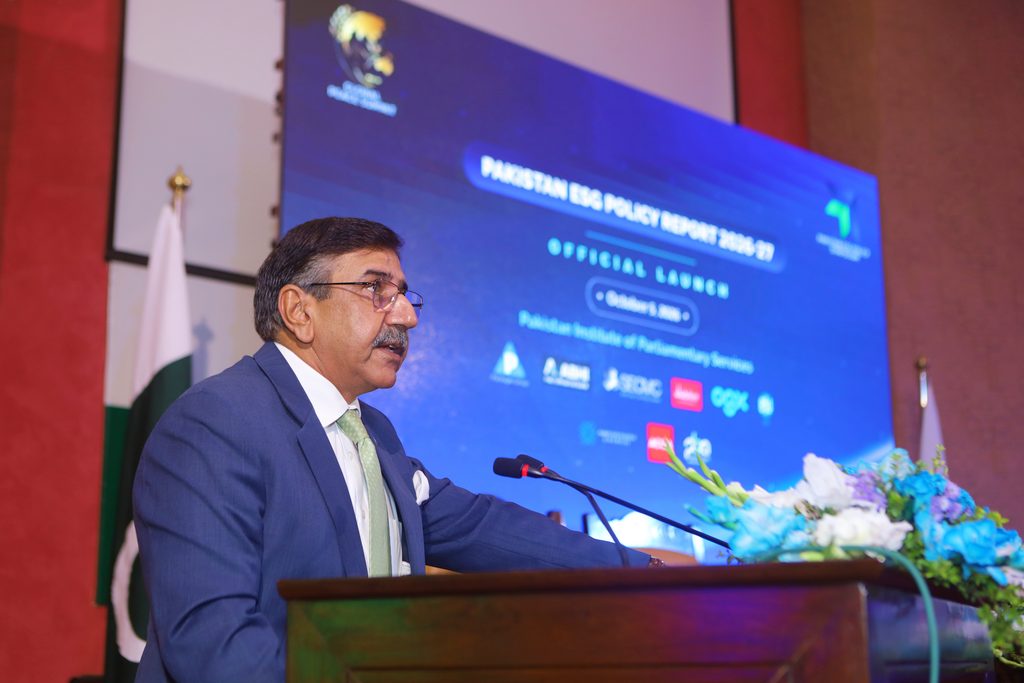
Lt. General Omar Mahmood Hayat (Retd.), Patron-in-Chief, Global Peace Summit, delivered the keynote address, emphasizing climate disaster risk management and a broader framework for effective governance in Pakistan.
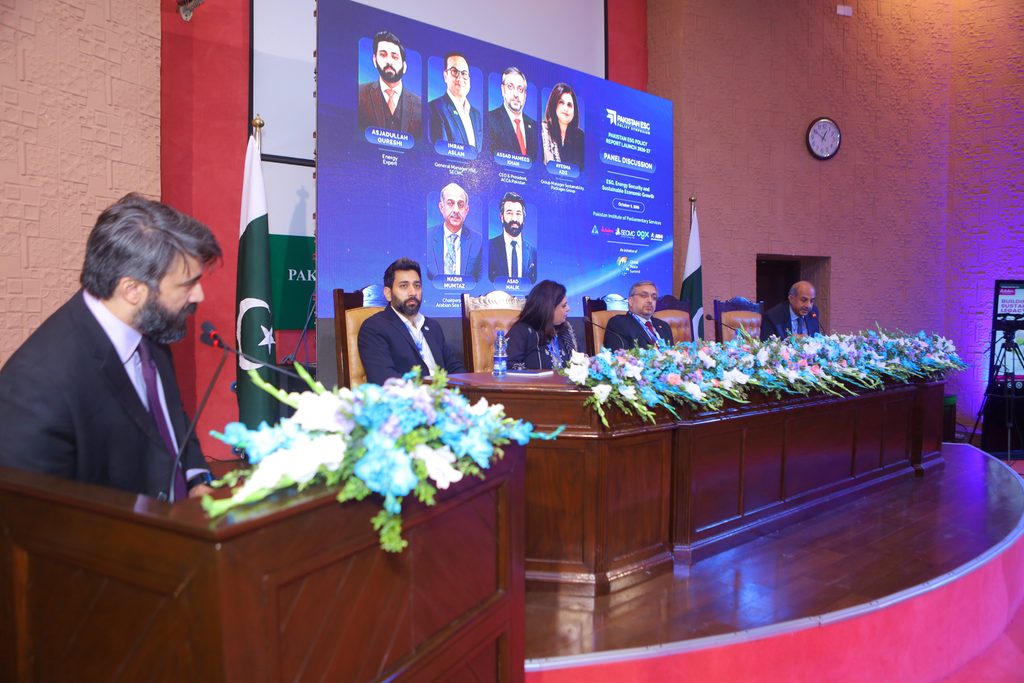
The first policy discussion, From Commitment to Implementation, was moderated by Mr. Asad Malik, Head of PR, ACCA Pakistan, with Mr. Assad Hameed Khan, CEO, ACCA Pakistan; Ms. Ayesha Aziz, Group Manager Sustainability, Packages Group; Mr. Asjadullah Qureshi, Deputy Director, NEPRA; Mr. Imran Aslam, GM HSE, Sindh Engro Coal Mining Company (SECMC); and Mr. Nadir M., Chairperson, Arabian Sea Centre for Development, as panelists.
The second policy discussion, From Framework to Law, brought together Mr. Muhammad Khashih ur Rehman, Additional Secretary, Ministry of Law and Justice; Mr. Ahsan Gaylani, former National Expert, UNIDO Pakistan; Mr. Hasnain Kazmi, Advocate, Supreme Court of Pakistan; and Dr. Hassan Daud Butt, PhD PMP, Senior Advisor, China Energy Engineering Group Co. Ltd., under the moderation of Ms. Sarah Kazmi, Partner, Energy Resource Management.
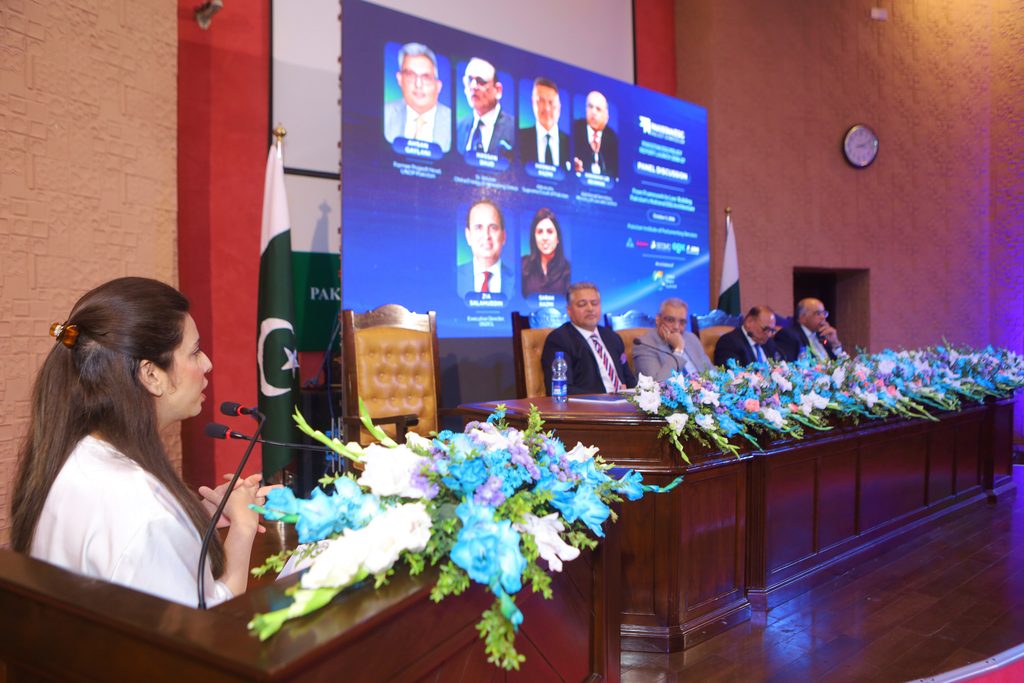
In his keynote address, Mr. Kabeer Naqvi, Entrepreneur in Residence, Abhi (YC S21), stressed the importance of swift and sustainable financial access to all citizens. The event concluded with remarks by Brigadier Aslam Khan (Retd.), General Secretary, Global Peace Summit.
The Report has been developed with contributions and engagement from institutions including SECP, State Bank of Pakistan (SBP), Pakistan Banks Association, Pakistan Textile Council, and ACCA, as well as industry and sustainability experts.